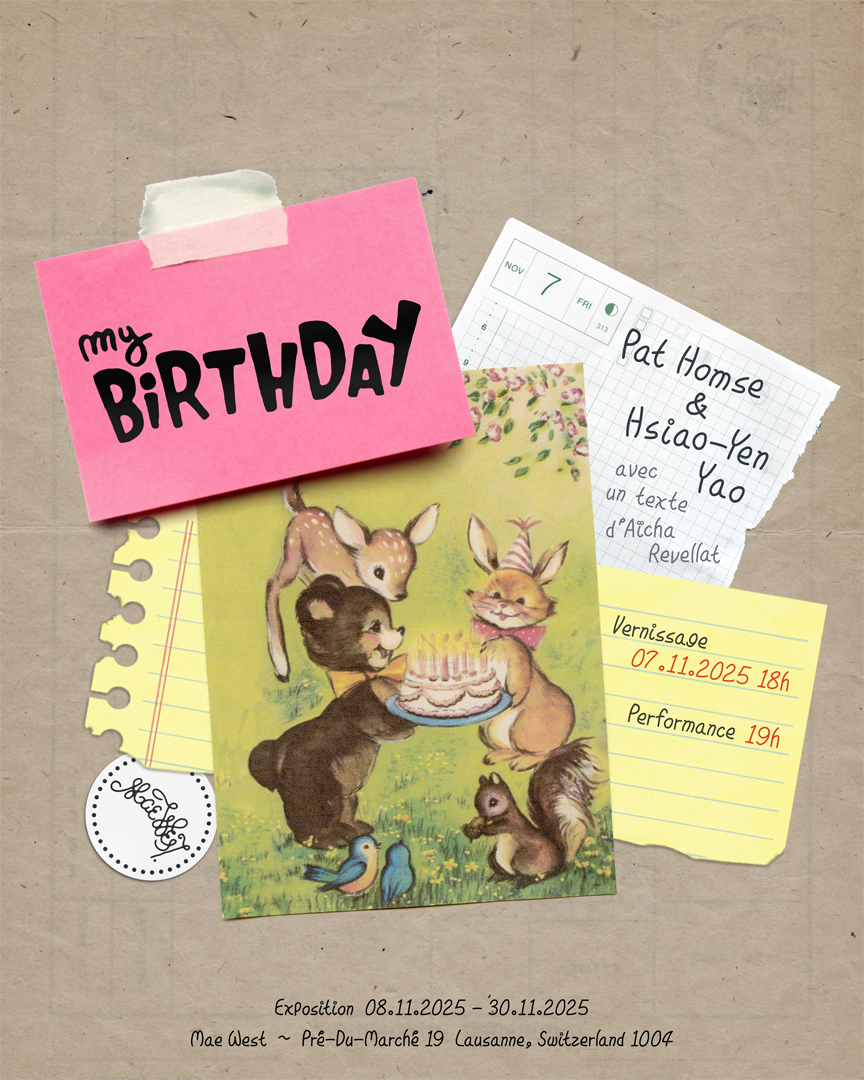
My Birthday
Pat Homse & Hsiao-Yen Yao
#8 — 7 novembre 2025
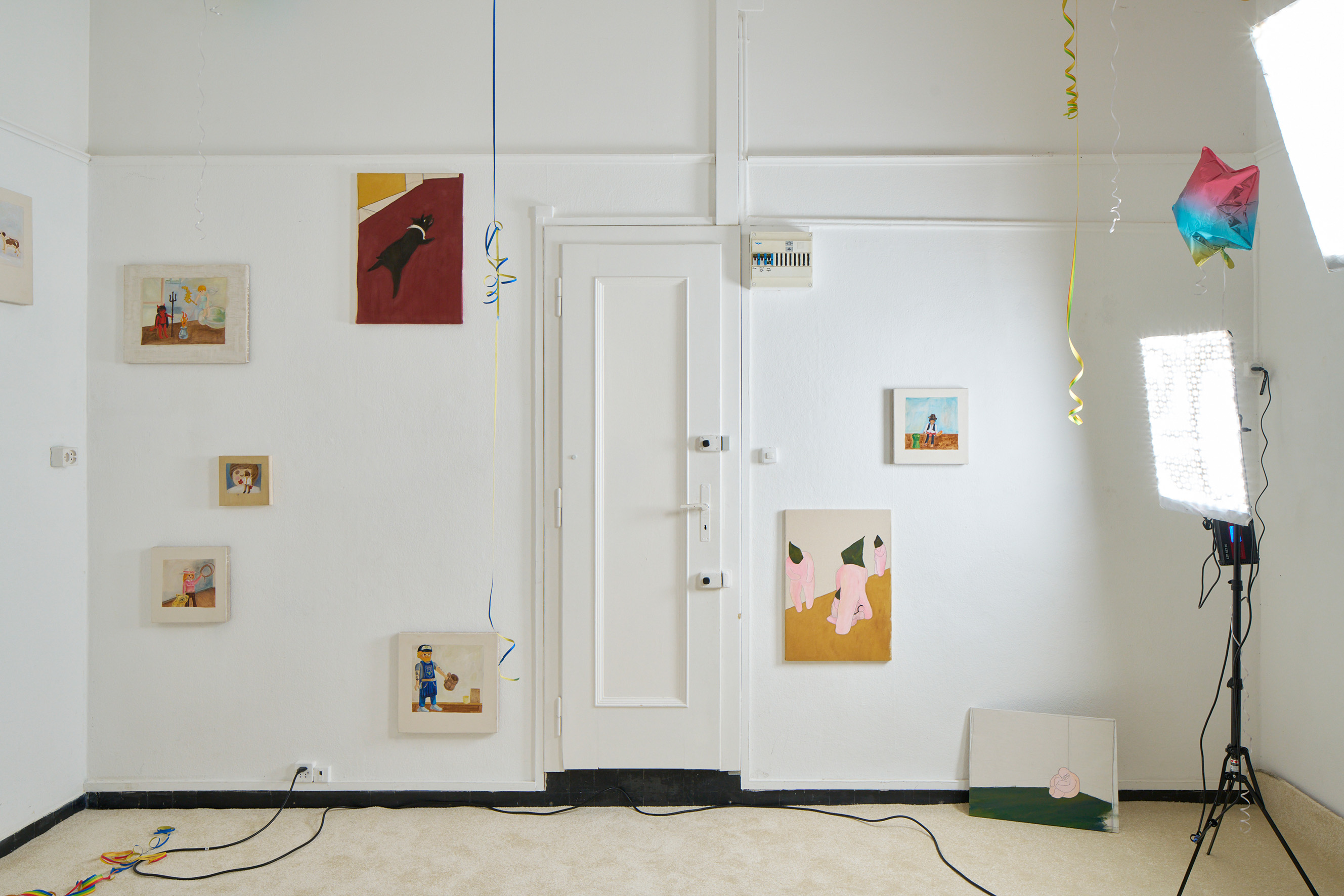
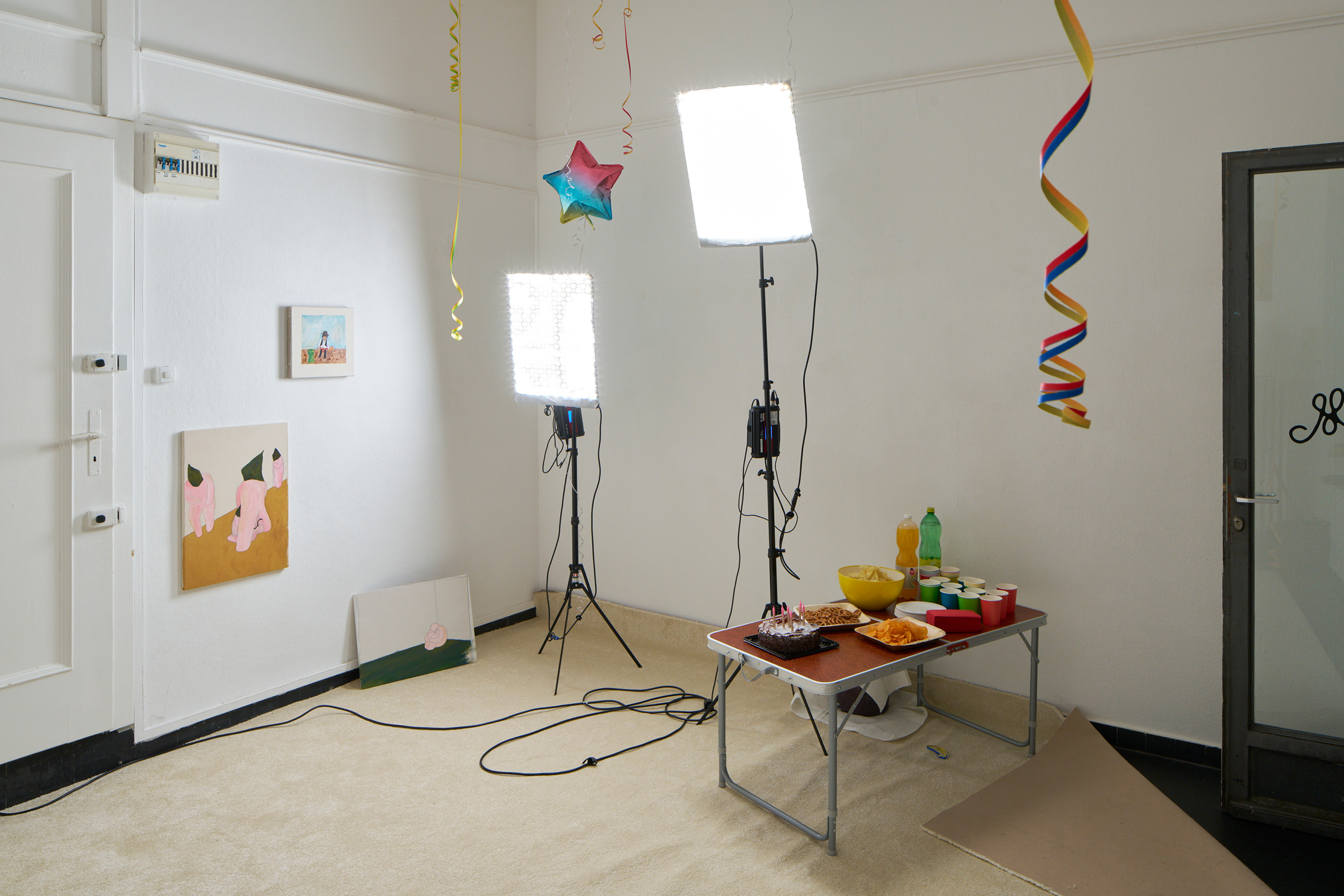
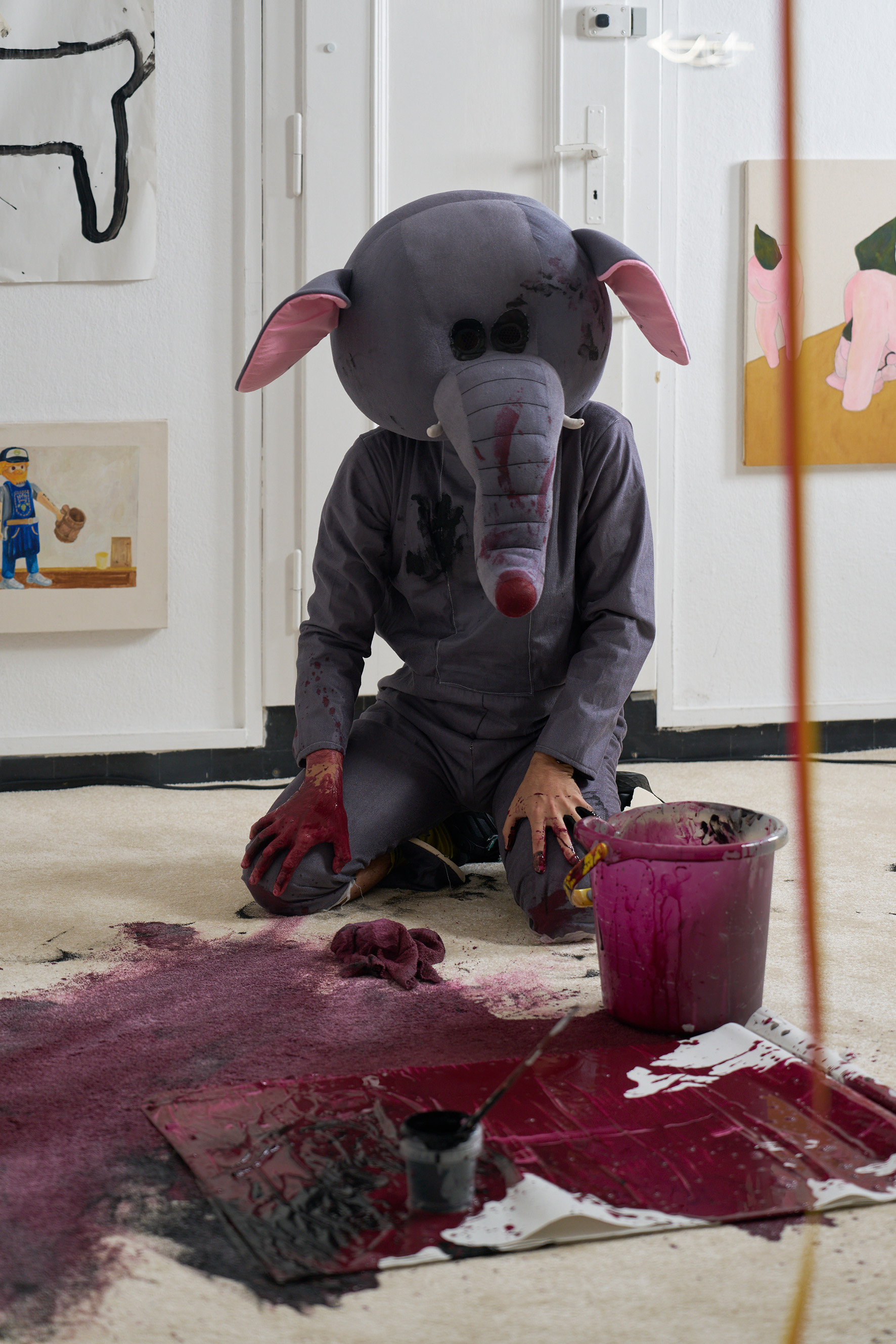

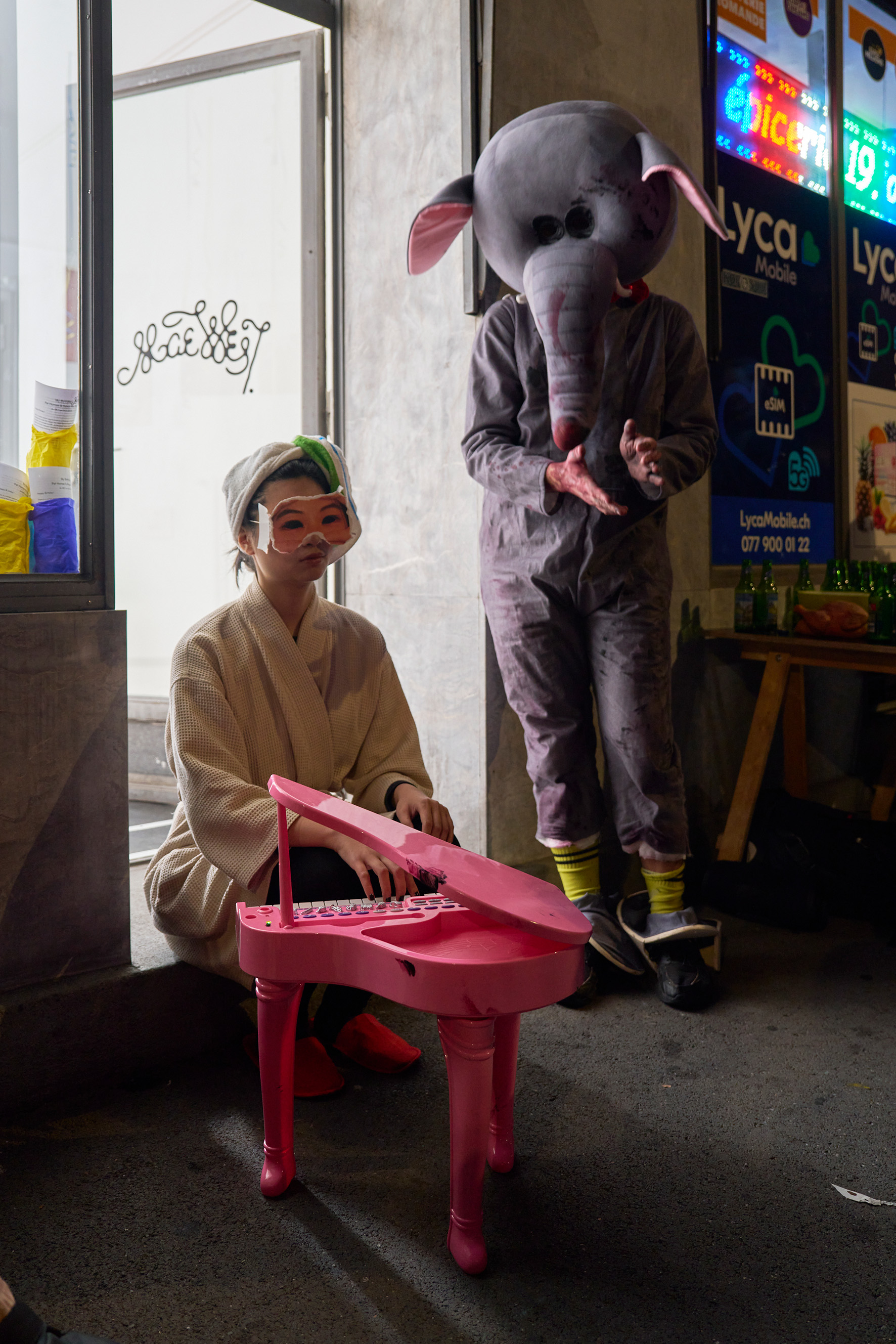
### Happy Birthday!
There is a certain passive aggressiveness embedded in this phrase, an imperative command that insists: Be happy! You were born! It appears cheerful and pink on the surface, yet conceals something bloodier, more violent beneath. Painting, too, inhabits this tension between revelation and concealment, adding and erasing, layering and shaping meaning through acts of covering and exposure.
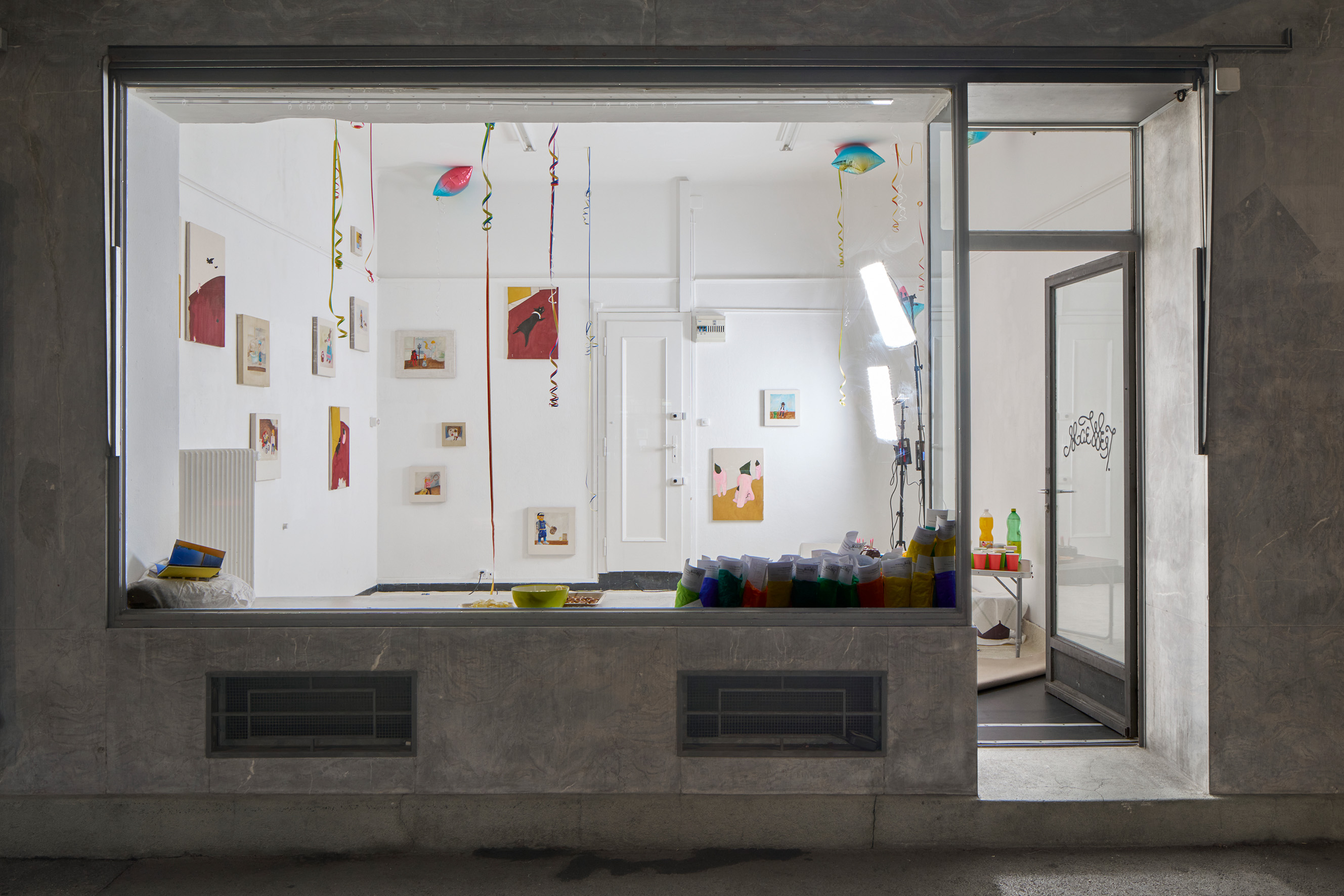
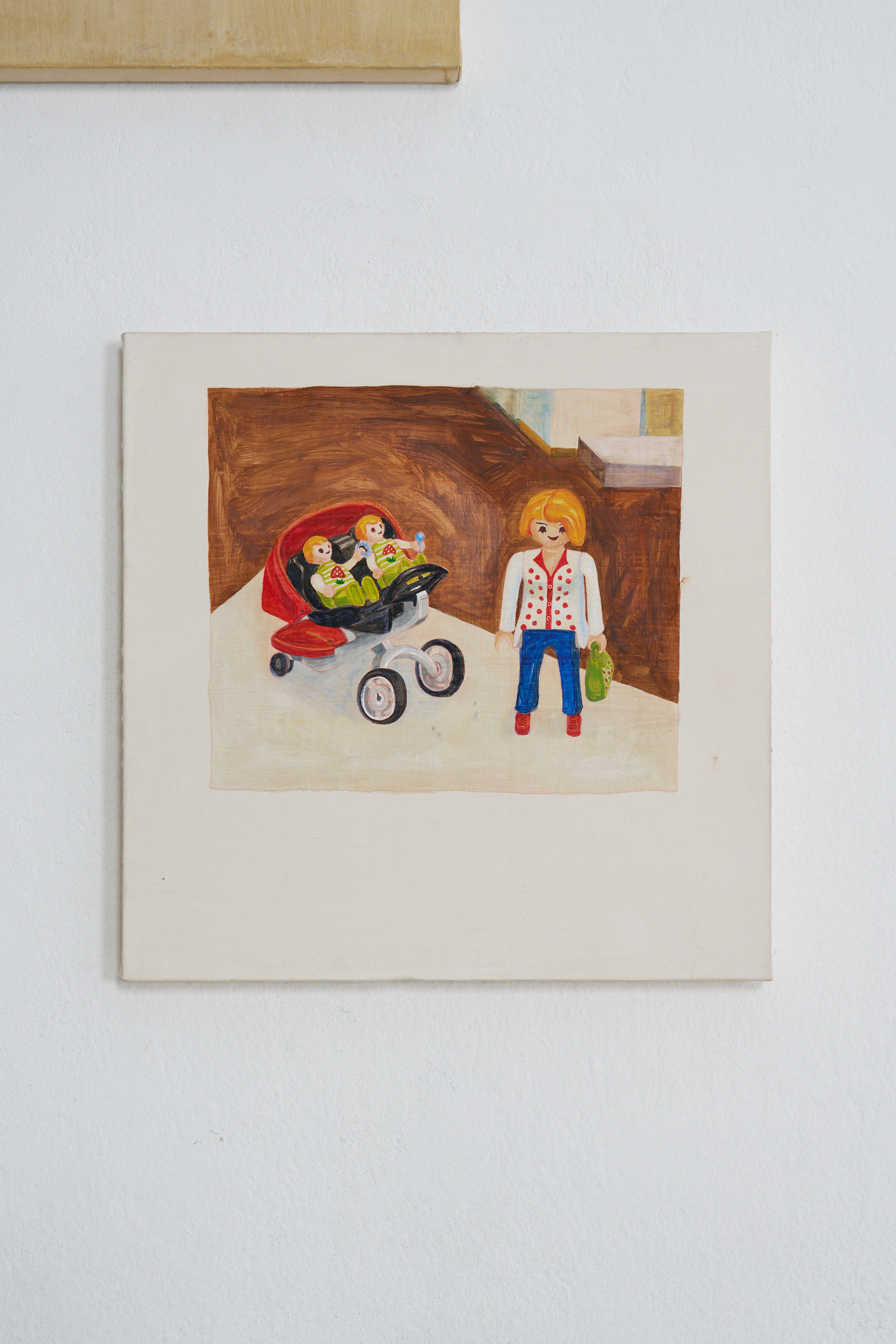
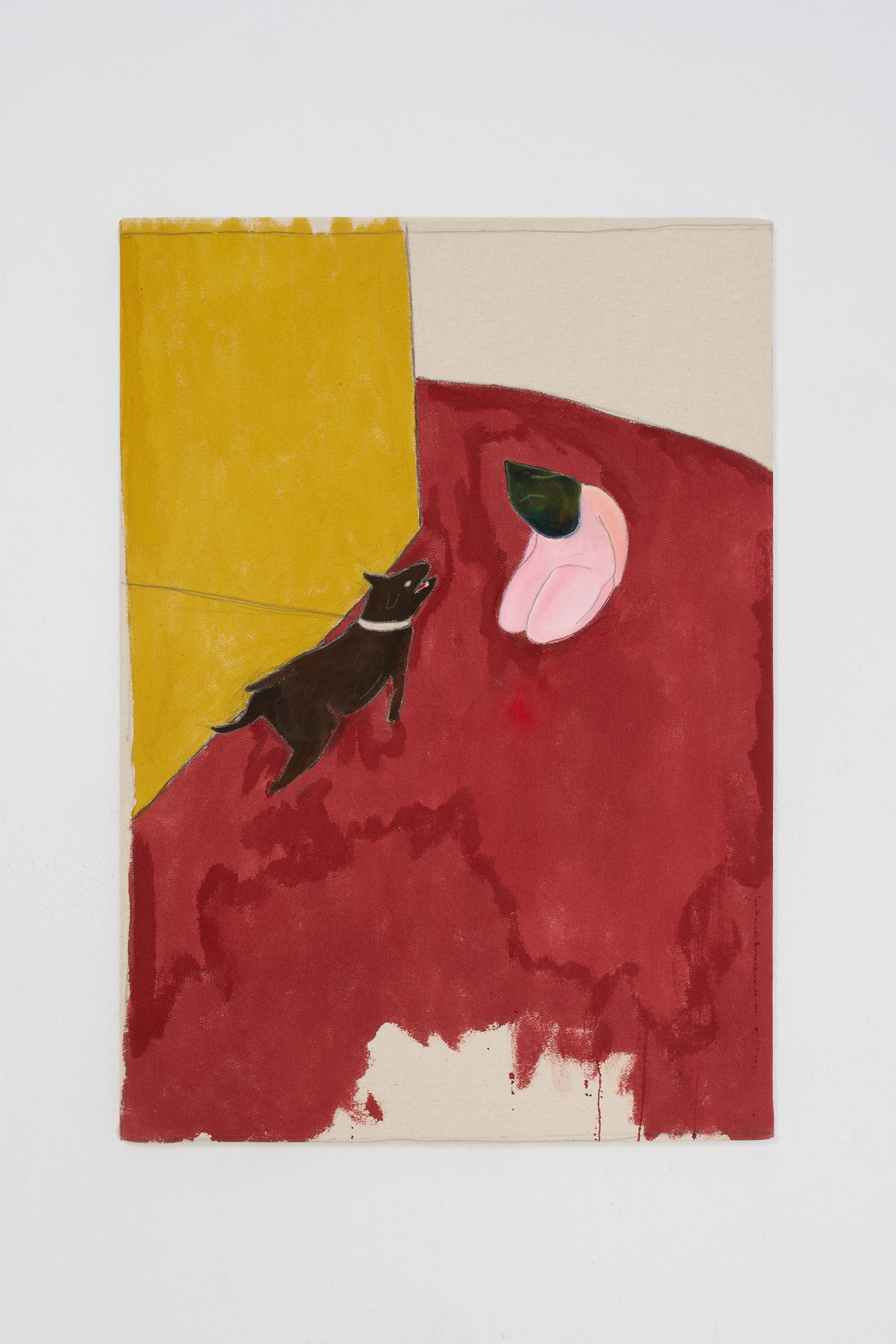
At first glance, the practices of Hsiao-Yen Yao and Pat Homse seem so distinct that their collaboration might appear improbable. Yao’s quiet, impastoed portraits of the plastic Playmobil world and Homse’s depictions of torture, rendered in dark reds and greens, occupy seemingly opposite realms. Both artists, though working within distinct aesthetic registers, share a concern with the intersecting dynamics of looking, containment, and the representational processes through which violence is enacted.
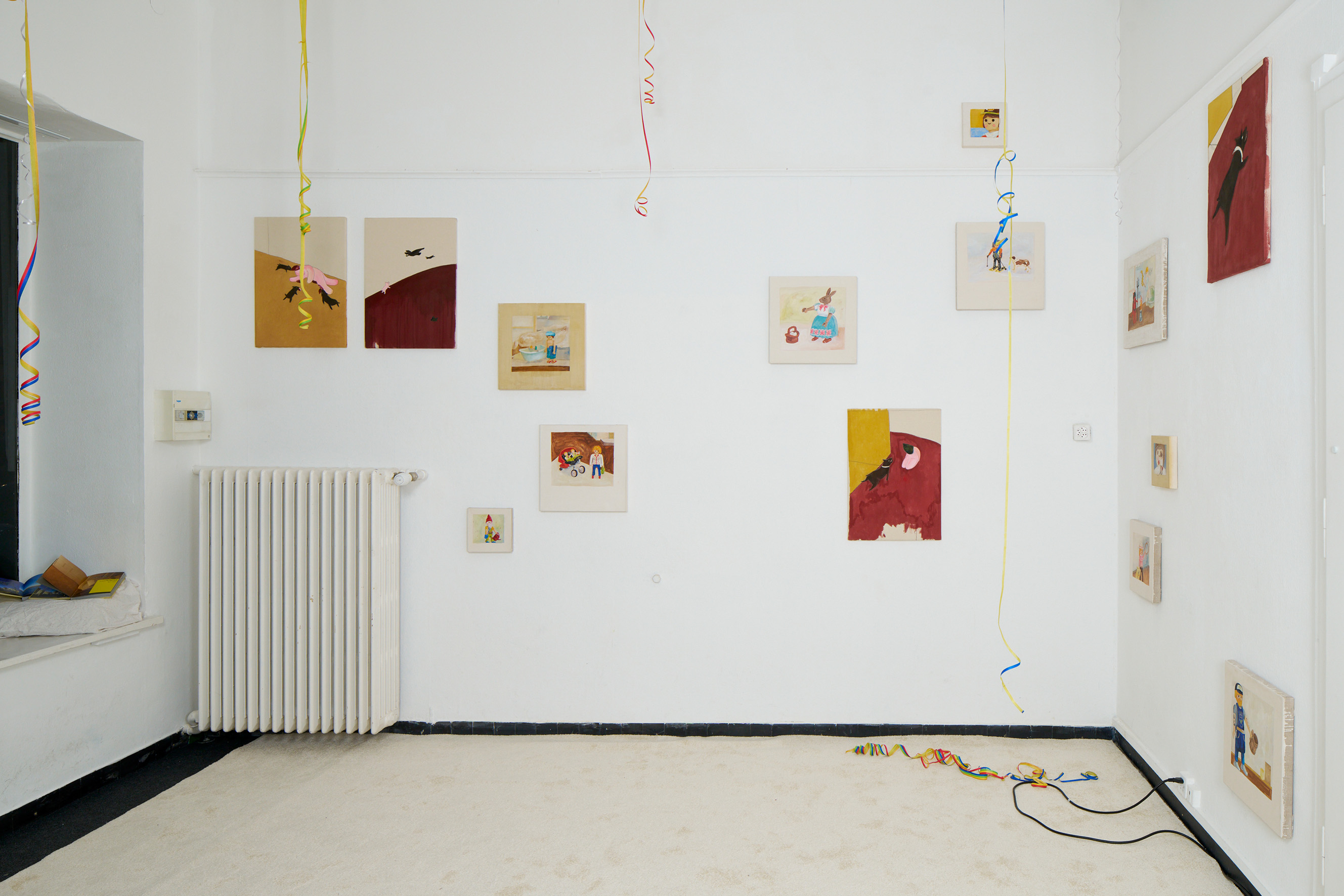
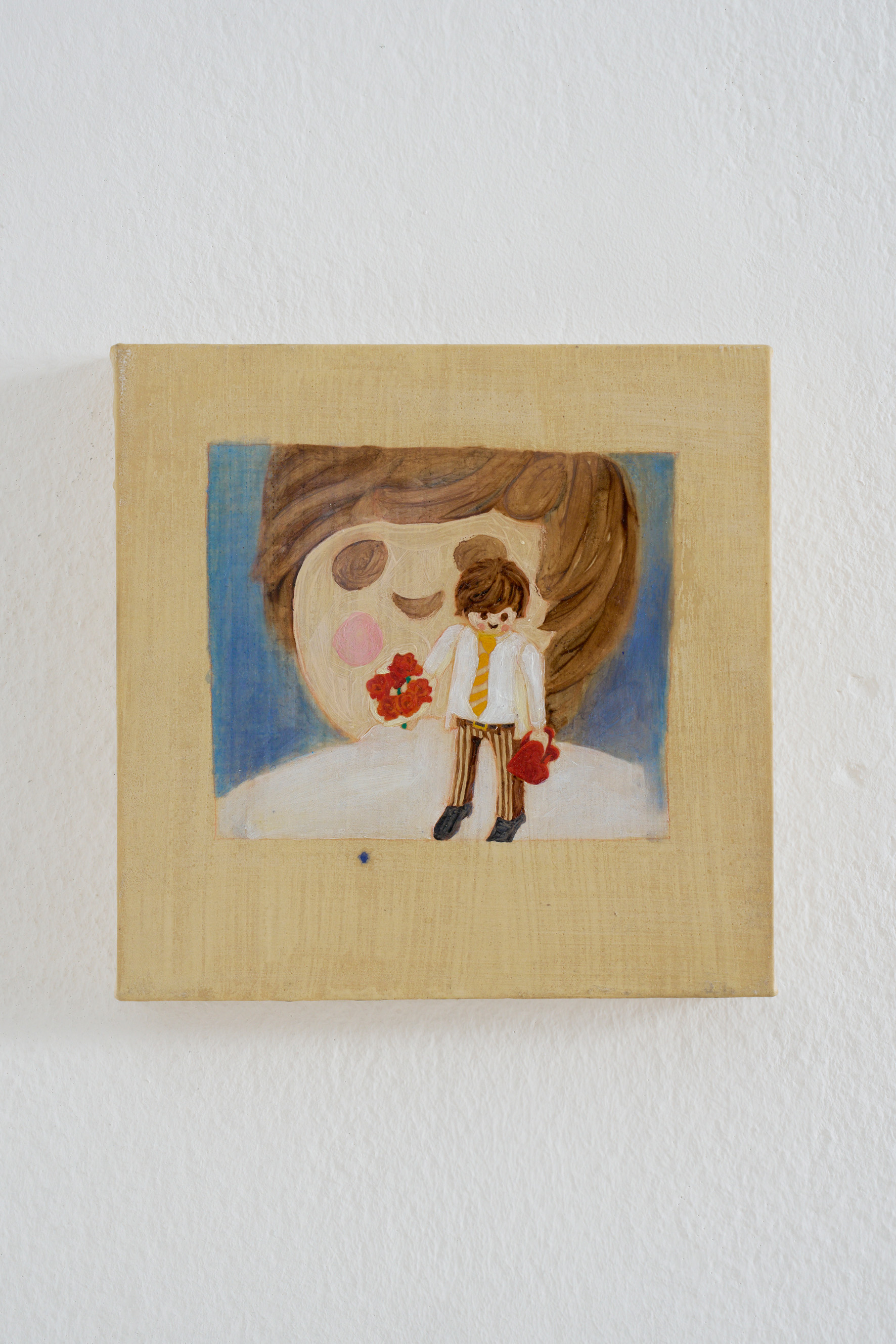
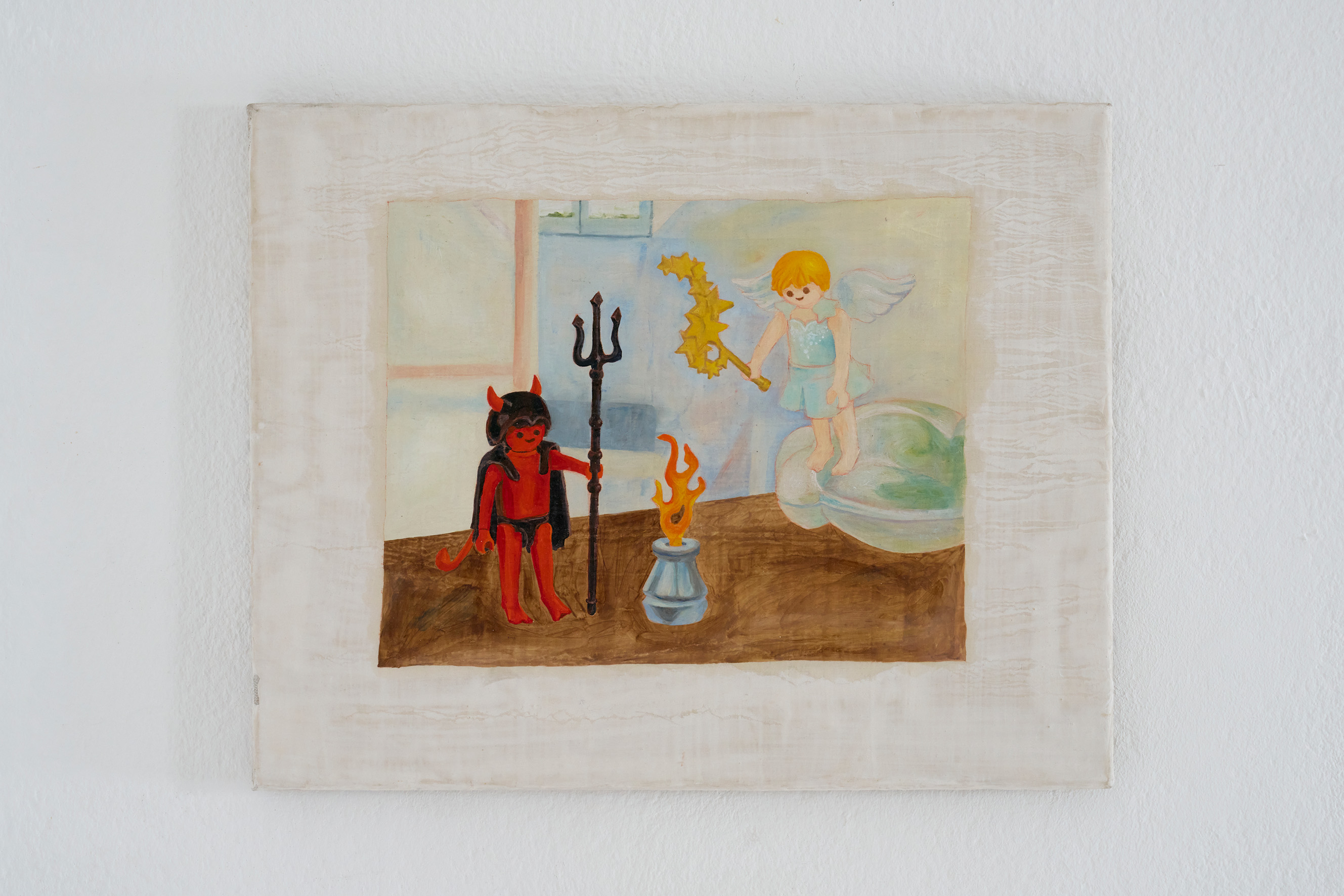
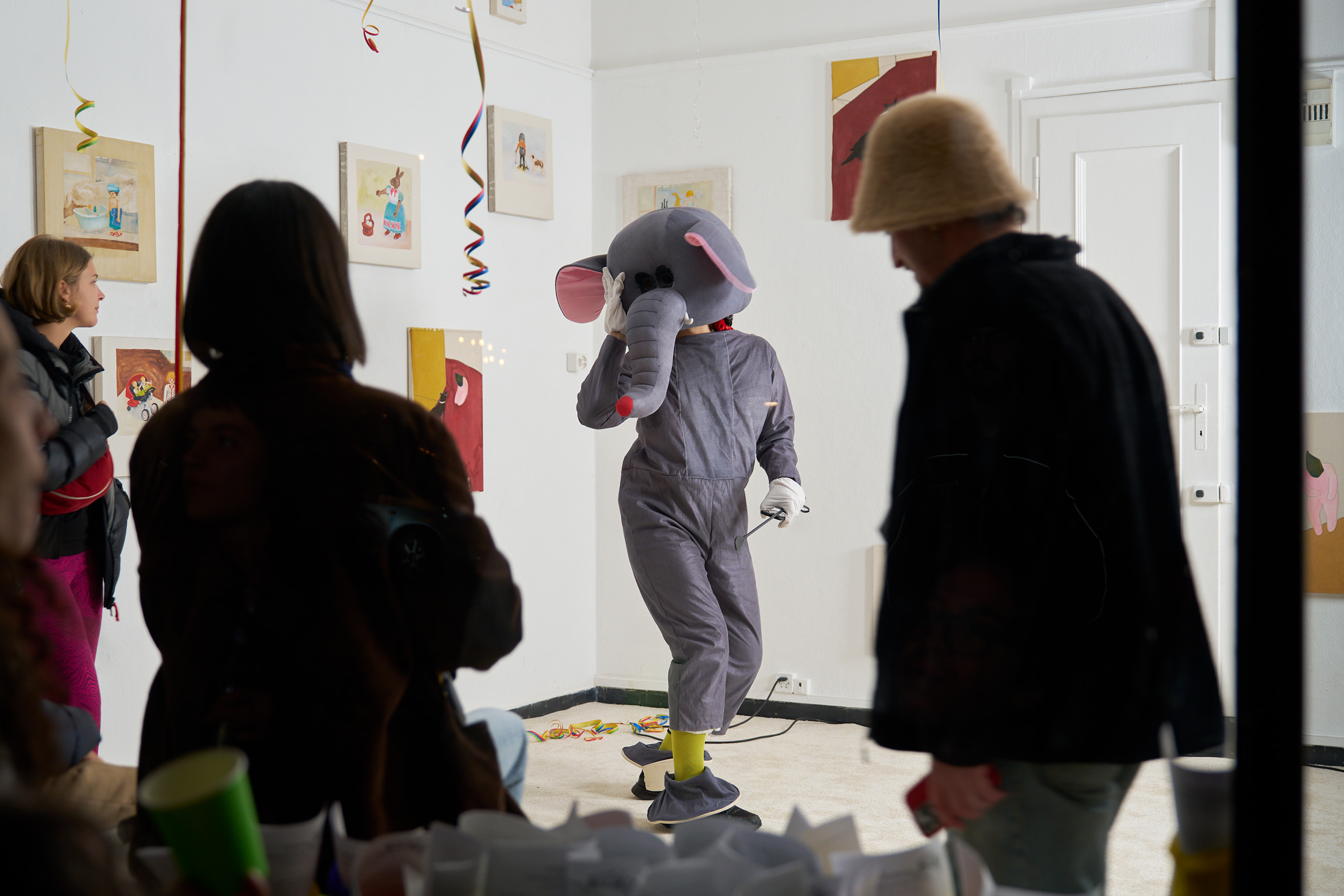
Yao’s portraits of Playmobil figures, with their frozen smiles, generate distance. They are generic and curiously inhuman and yet the images of the plastic protagonists are seductive. Painted in soft lines and sumptuous colors, they possess a sensitivity absent in their models. One is reminded of Elizabeth Peyton’s intimate portraits of friends and celebrities, which oscillate between votive image and pop pastiche. Here, however, a different gaze is at work. Engaged in ordinary activities such as bathing, delivering pizza, or skiing, Yao’s figures embody a calm indifference, a poised nonchalance that feels at once serene and suffocating.
Raised between Taiwan and Australia, Yao situates her practice within a medium historically regarded as Western. In her paintings, one senses a quiet resistance. She avoids traditional frames that divide the painted world from the viewer’s reality and instead weaves painterly boundaries into the composition itself. The rectangular space, reminiscent of a television or smartphone screen, is edged by a soft gray border that reveals the undercoat of the canvas, the painting’s bare foundation.
Yao’s works are modest in scale, reflecting the cultural expectations of her upbringing in Taiwan, where humility and agreeableness are cherished virtues. The pastel tones and delicate compositions reinforce this connection, their restraint carrying both tenderness and rebellion. Beneath this subtle beauty lies another kind of violence: the violence of enclosure. Yao’s polished, pastel worlds evoke the sanitized comfort of Switzerland, or more broadly, of the West itself. They depict a space that appears orderly and harmonious, yet is closed to outsiders. The cruelty here is not explicit but structural, a violence maintained through exclusion and silence.
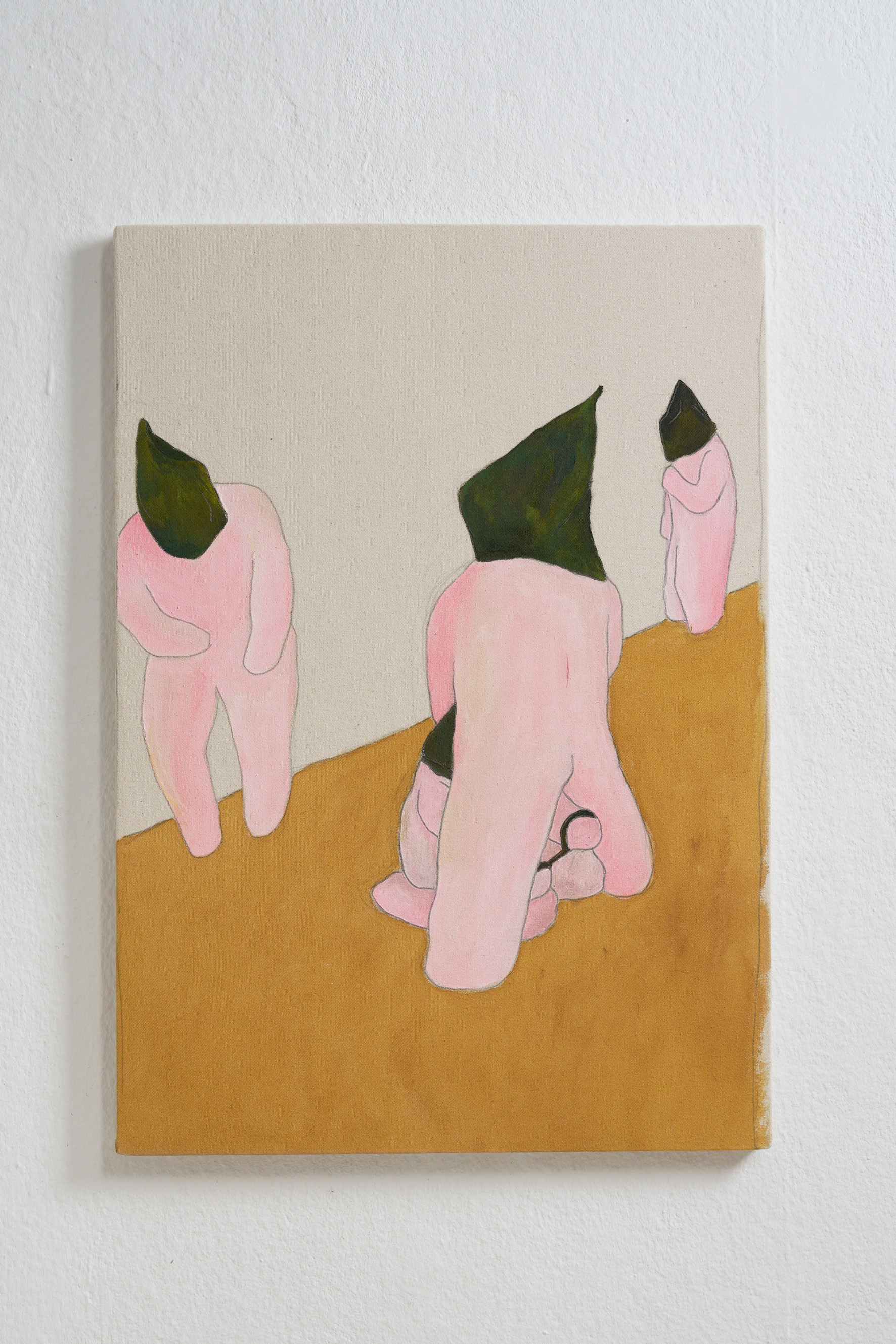
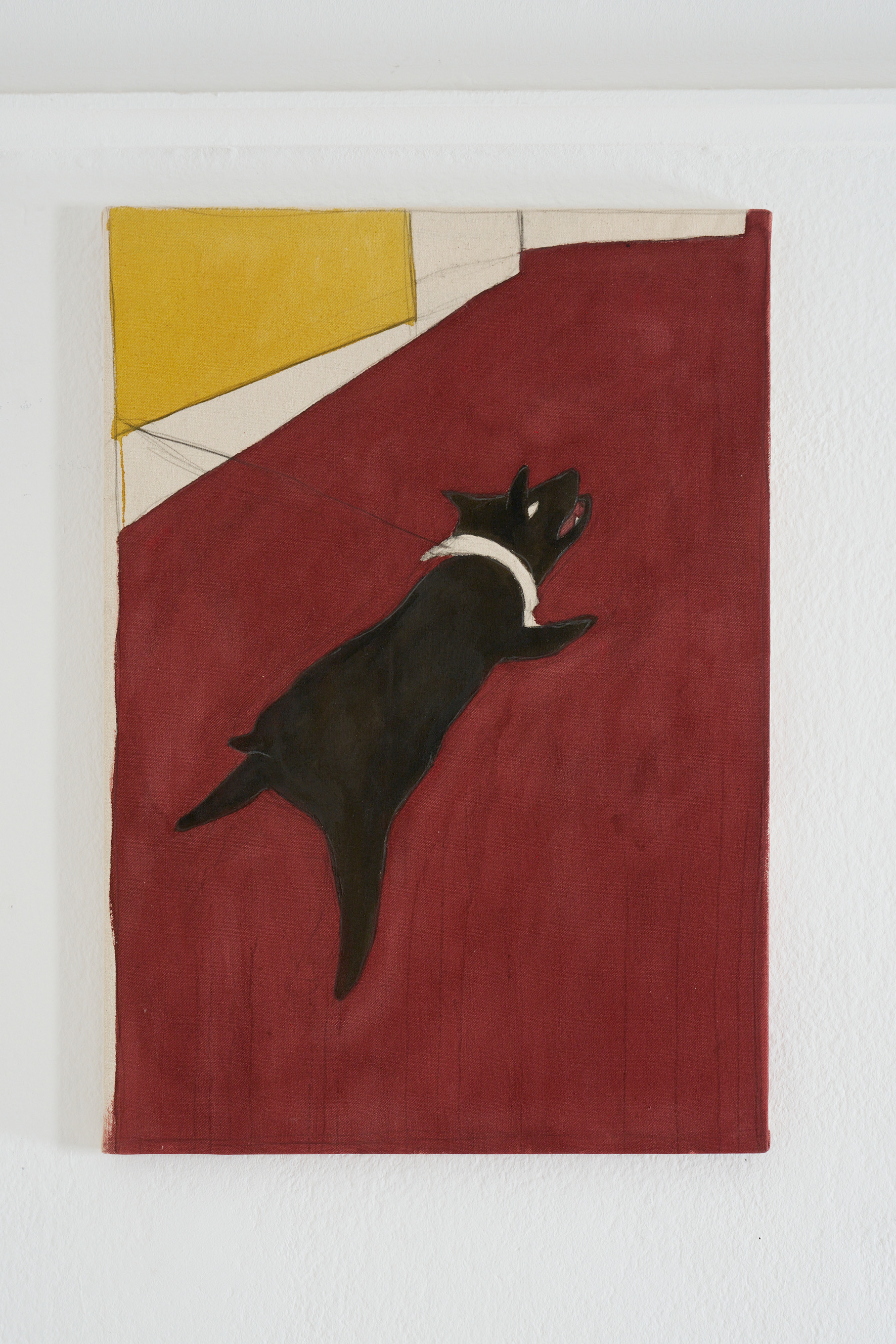
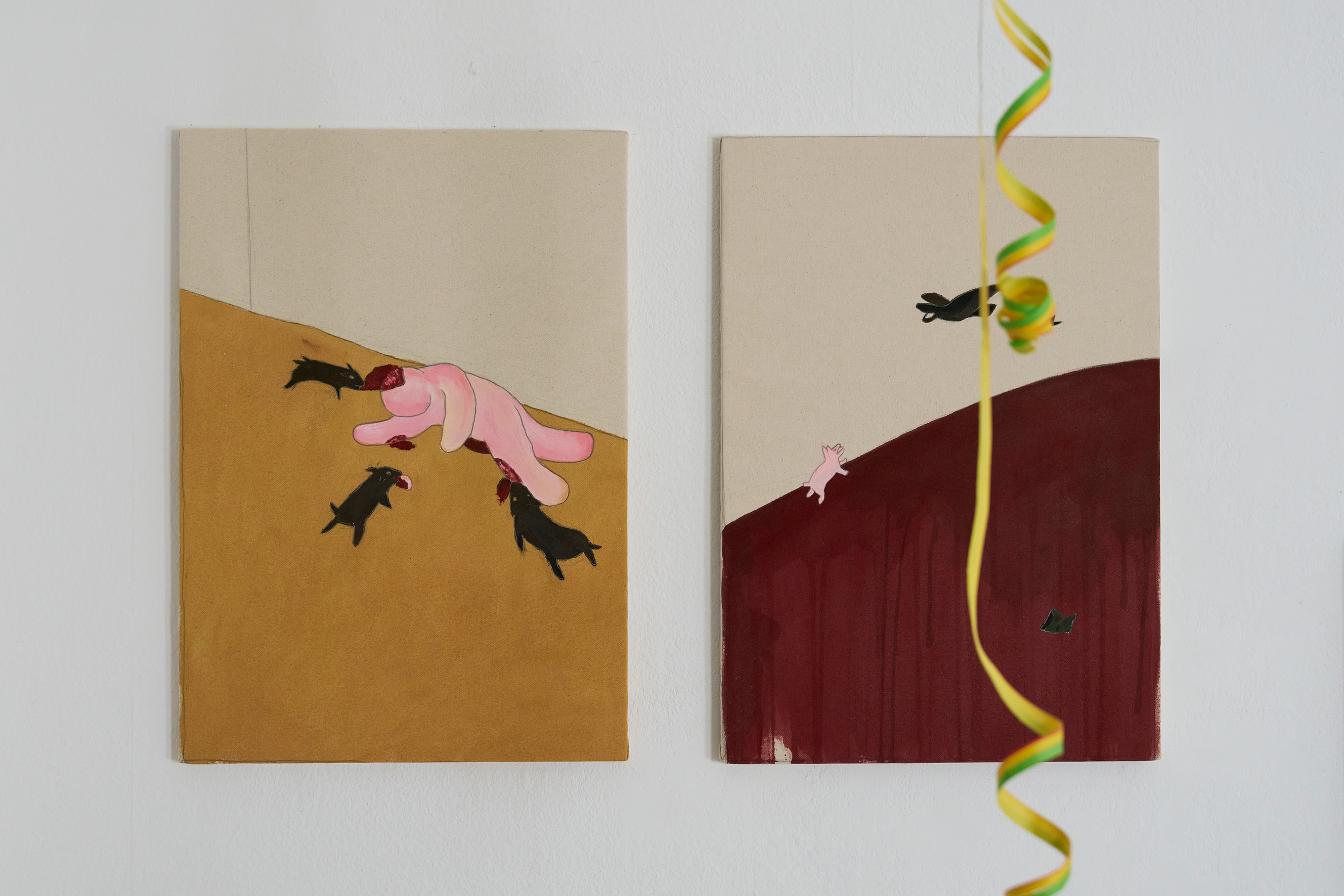
Homse’s paintings, by contrast, refuse concealment. Their faceless figures, raw and exposed, mark the artist’s first series in twelve years. Stripped of identity and humanity, these bodies become instruments of pleasure for their tormentors. Pink flesh stands against thin layers of dark red and ochre, barely covering the frameless canvas. The continuity of color and motif—anonymous human forms and dogs restrained by unseen hands—suggests an obsessive meditation on cruelty. Burgundy paint drips like blood, saturating the surface. Pencil lines remain visible, containing the bodies before they dissolve into empty space.
Where Yao’s violence is quiet and systemic, Homse’s is immediate and physical. Her paintings confront us with images we are accustomed to seeing on our screens, images of pain and humiliation that flicker past us every day. Here, however, they are fixed in paint. The act of painting transforms fleeting digital spectacle into enduring confrontation. In this stillness, the viewer can no longer scroll away.
Sadism, the perverse pleasure derived from another’s suffering, might be described as a game, though a cruel one. The Playmobil world offers its sanitized counterpart, inviting children to reenact conquest, battle, and romance within a safe and controlled space.
Created in 1974 by the German designer Hans Beck, Playmobil was conceived under the motto “no horror, no violence, no short-lived trends.” Yet the first figures—a knight, a so-called Native American, and a builder—already revealed the naivety of that claim. Today, the Playmobil universe extends far beyond those masculine archetypes, populated by pizza delivery women, Romeos, angels, and devils. In doing so, it inadvertently embodies the very horrors Beck sought to avoid: the violence of patriarchy and the quiet brutality of capitalism.
In Regarding the Pain of Others (2003), Susan Sontag observes that images of suffering and torture awaken not only empathy but also a forbidden fascination. The response cannot be understood as purely moral, for these images provoke both compassion and a disturbing curiosity toward pain and shock. This duality feels painfully familiar in an era when atrocity can be live-streamed to millions of screens.
Georges Bataille, as Sontag reminds us, understood torture as the moment when human experience disintegrates, when pain and ecstasy, horror and rapture, become indistinguishable. In the tortured body he perceived not only cruelty but also an encounter with the sacred, a moment in which being dissolves into pure intensity. His meditation on a photograph of a man subjected to lingchi, the “slow death,” captures this paradox: agony that evokes both revulsion and transcendence.
Homse’s depictions of torture operate not only as representations of violence but also as reflections on the act of viewing itself. The leash of the black dog extends beyond the pictorial frame, implicating the viewer as a potential participant in the scene. While the original photographs of torture, such as those from Abu Ghraib, circulate endlessly as reproducible images and perpetuate humiliation through their dissemination, Homse’s painted interpretations reclaim the singularity of the image. As unique, material objects they resist the logic of digital replication and demand a slower, more contemplative mode of seeing that confronts the ethical and affective dimensions of spectatorship.
In the lucid cruelty of the Marquis de Sade’s world, Bataille discerned a deeper philosophical truth: desire tends inexorably toward its own dissolution, compelled by the attraction of what undoes it. Torture thus emerges as a perverse site of revelation, a dark mirror of transcendence in which the human subject confronts its own limit and perceives, fleetingly, the eternal within the wound. This logic does not remain confined to scenes of explicit violence; it extends into the structures that underwrite the everyday. Domestic life itself unfolds upon an invisible architecture of death, a sacrificial foundation necessary to sustain the myth of “the West.” Within this order, festivity and atrocity are not opposites but continuities, celebration borders annihilation, pleasure presses against the stillness of pain, and the fragile membrane separating them threatens always to give way.
Let them eat cake.
Aïcha Revellat
Basel, October 2025